What is Micro-Teaching?
posted on Jul 16, 2026
Learn what micro-teaching is, its key steps, features, and importance in improving teachers’ skills and creating better learning experiences for students.
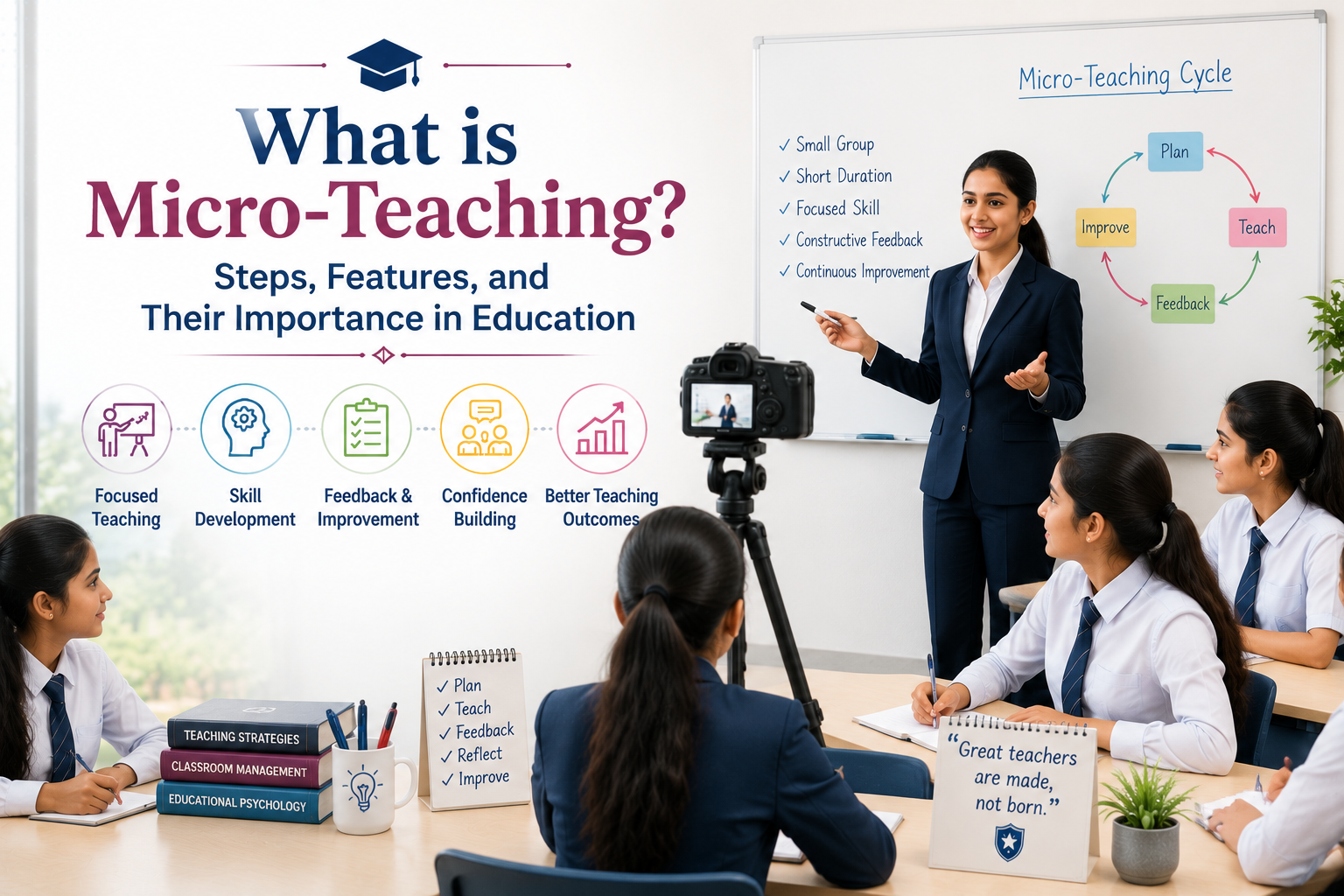
Teachers have always been a key pillar in the education framework, shaping students’ learning foundations and experiences. Yet, not many parents feel the need to enquire much about teachers during school exploration. They would focus more on the curriculum, infrastructure, facilities, and previous academic record, but rarely delve deeper into teachers’ qualifications and competencies.
Thankfully, it has begun to change over the years as parents have become more concerned about the quality of the teaching experiences their kids receive in schools. This especially holds true for girl-children, whose learning experiences during their school years play a crucial role in shaping their onward journey.
So, if you’re currently exploring the best schools in Delhi for your daughters and want to check whether the teachers are well-trained, ask whether they’ve taken relevant micro-teaching programs. Micro-teaching is one of the most crucial teacher-training mechanisms widely used in B.Ed., M.Ed., and teacher certification programs, as well as in professional development workshops. We’ve covered more about it in this blog post today, so read till the end.
What is Micro-Teaching?
Micro-teaching is a structured teacher training method in which educators practice delivering a short lesson to a small group of students or peers. There’s only one aim during these sessions: focusing on one specific teaching skill at a time.
A teacher may focus on explaining concepts in one short session and managing classroom interaction in the other. This approach delivers the best results because it makes learning more manageable for teachers. It also helps them build confidence and correct mistakes.
At Queen’s Valley School, a well-known CBSE girls school in Dwarka, New Delhi, the teachers regularly undergo micro-teaching experiences. This enables them to design impactful lessons and deliver meaningful learning experiences which immensely benefit our pupils.
Key Features of Micro-Teaching That Make It Worthwhile
If you’re new to micro-teaching, you can learn more about its key features in the section below:
-
Focus on one teaching skill at a time
Instead of trying to improve every aspect of teaching at once, micro-teaching focuses on one competency per session. This focused approach enables teachers to practice with greater purpose and measurable improvement.
-
Short and structured lessons
One of the best parts about micro-teaching is that each lesson is relatively short. Instead of taking longer, full-class sessions, micro-teaching asks teachers to undertake shorter five to fifteen-minute sessions.
Each short lesson is carefully planned around a single learning objective. This enables teachers to focus on improving their teaching approach rather than managing an entire class. This format makes practice more effective and less overwhelming.
Micro-teaching lessons intentionally have a smaller audience. It makes the lessons less overwhelming, creating a supportive experiential environment.
Steps Involved in the Micro-Teaching Process
As we’ve already mentioned, micro-teaching is a structured step-by-step process, so let’s explore the steps included to gain better clarity on how it’s conducted.
-
Step 1: Planning the lesson
The process starts by selecting a single teaching objective and identifying one specific teaching skill the individual wants to practice.
-
Step 2: Teaching the mini-lesson
The teacher then delivers a short lesson to a small group. Most short lessons usually finish between five and fifteen minutes.
As the teacher delivers the lesson, others in the class carefully observe various aspects of teaching. It includes communication, classroom interaction, and clarity of explanation. These observations are then used to deliver detailed feedback at the end of the class.
-
Step 4: Receiving feedback
The supervisors and mentors present in the class collect valuable feedback throughout the micro lesson and deliver it at the end of the class. The feedback is always constructive and includes both positives and drawbacks.
-
Step 5: Revising the lesson
Teachers use the feedback they receive after their sessions to refine their teaching.
-
Step 6: Re-Deliver the lesson
After refining their teaching practices using feedback, teachers re-deliver the same lesson, incorporating the suggestions shared by the observers. This second attempt helps reinforce better teaching practices and also demonstrates measurable progress.
This is the final step, in which the teacher reflects on overall improvement and receives additional feedback if required.
At Queen’s Valley School, one of the best schools in Delhi, we encourage our teachers to go through this process to refine their teaching prowess repeatedly. It usually shapes the best teachers who can deliver phenomenal learning experiences.
Why is Micro-Teaching Important in Education?
Micro-teaching is considered extremely important in the modern education framework. That’s because it is an effective technique to help teachers grow into impactful ones. It essentially improves the overall quality of education by helping teachers strengthen their skills that directly influence student learning.
If you recheck the steps and features we’ve shared above, you’ll notice the special attention given to focused practice and constructive feedback. That is so because these aspects help teachers become more skilled and confident in their work. It aids in their self-improvement, so that they grow better prepared to handle modern teaching challenges.
The more the teachers refine their teaching skills through micro-teaching, the more the students will benefit. They’ll benefit by receiving better-planned lessons, increased classroom participation, and a more supportive learning environment.
Frequently Asked Questions (FAQs)
-
Is micro-teaching only meant for new teachers?
No, both new and experienced teachers can undergo micro-teaching to learn and refine their teaching skills.
-
How long do micro-teaching lessons last?
Most micro-teaching lessons generally last between five and fifteen minutes, as teachers focus on only one aspect of teaching.
-
Does micro-teaching improve students’ learning experience?
Yes, it does. Micro-teaching programs help people become great teachers, enabling them to deliver better learning experiences. It also, eventually, works in the benefit of students as they get a better overall learning experience and more dependable guidance and mentorship from the teachers.
Conclusion
Every individual in the teaching profession should compulsorily undergo micro-teaching programs, as it will help them become better teachers. From effective lesson planning to explaining concepts with utmost clarity, micro-teaching ensures that teachers excel in every aspect of teaching.
It’s a key reason we at Queen’s Valley School evaluate teachers’ micro-teaching experience before onboarding them. Being one of the best schools in West Delhi with a pedagogy that’s especially crafted to deliver unsurpassed learning experiences to every single girl child studying with us, we make our teachers undergo advanced micro-teaching programs regularly. This helps ensure they always stay up to date with the latest teaching methods for our students’ benefit.